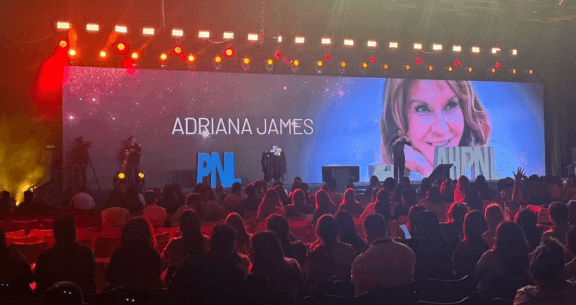
The part worth noticing did not happen on the stage.
Dr Adriana James had finished her keynote at the International PNL Congress in Lima, Peru, in front of more than a thousand people. She had come off the stage. And a line formed. Not a polite trickle toward the exit, but people waiting, wanting a photograph, wanting a moment, wanting to say something to her directly.
That response is a reasonable measure of a keynote, and it is a better one than applause. Applause is what a room gives a performance. Queuing afterwards is what people do when something has landed in them personally and they want to take it somewhere.
Over the past two weeks Dr Adriana James has delivered two international keynotes, and the ideas she shared in both are worth setting down properly rather than simply noting that she was there.
Two Keynotes, Two Weeks



| ABH Hypnosis Conference 2026 | International PNL Congress 2026 | |
| Host | American Board of NLP and Hypnotherapy | Science of Success, Lima, Peru |
| Timing | Mid September 2026 | 26 and 27 September 2026 |
| Her role | Closing keynote | International keynote speaker |
| Audience | Hypnotherapists, coaches, trainers, practitioners | More than 1,000 attendees |
| Focus | A practical, future-focused process drawn from Time Line Therapy® | Belief change, values and how internal patterns shape experience |
For readers outside Spanish-speaking markets, PNL is Programación Neurolingüística, the Spanish acronym for NLP. The Lima Congress brought together five international speakers, including Marissa Peer, Fabián Tejada, Anna Flores and Nilda Chiaraviglio, across two days covering the mind, beliefs, emotions, communication, leadership and performance.
The Line That Anchored the Lima Keynote

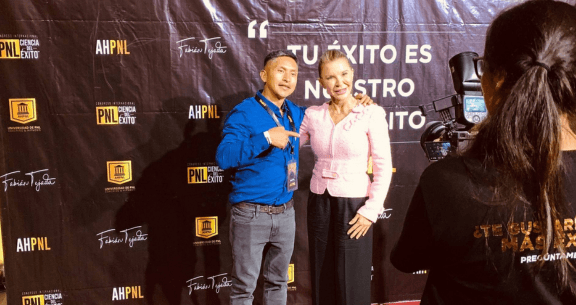
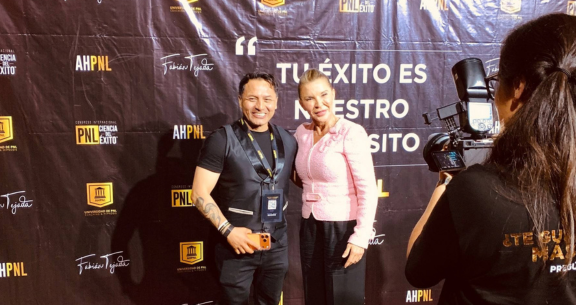
Of everything Dr Adriana James said on the Lima stage, one sentence has travelled furthest.
“If you think you’re not good enough, that’s a belief you can change.”
It is a plain sentence and it does a great deal of work. Notice what it does not say. It does not say you are good enough, which is reassurance, and reassurance tends not to survive contact with someone’s actual Monday. It says the thing standing in your way is a belief, that beliefs have structure, and that structures can be worked with.
That distinction is the difference between encouragement and method, and it is the reason she has built four decades of work on the second one.
Her keynote drew on the areas that have shaped her teaching: how internal patterns, beliefs and thinking influence behavior; her work with negative emotions, limiting decisions and limiting beliefs through Time Line Therapy®; and values-level thinking, meaning how values shape what motivates people and how they make sense of the world.
Fabián Tejada, who also presented at the Congress, introduced her to the room with a line that needs no expansion.
“We have a brilliant mind here in Lima right now.”
At the ABH Conference, She Gave Them Something to Use
Her closing keynote at the American Board of NLP and Hypnotherapy conference took a different shape, and she had signalled her intention beforehand in an interview with the Board.
Asked what attendees could expect, she said she wanted to share a process that was practical and immediately usable, drawn from Time Line Therapy® and oriented toward the future rather than the past.
That is what she did. The session worked with how the conscious and unconscious mind have to be aligned for a goal to hold, and with what happens when they are not. Her framing is that relying on logic alone, or on feeling alone, produces a bind rather than a result. She also made a point that is unusual to hear from a stage: that visualisation is not a substitute for effort, and that tangible action remains necessary.
The process itself is taught properly within our programmes rather than summarized here, for the straightforward reason that it involves working with a person’s own material and is better learnt with supervision than from an article.
Insider Tip From Dr Adriana James: “Whenever you think you know something, you get completion on a subject, and that makes further development, further growth, further learning impossible.” She describes the mind as having a trap door that closes at exactly that moment, a metaphor she is careful to credit to Dr Tad James rather than claim as her own. Keeping it open is deliberate work, and curiosity is the mechanism.
What She Said About Being a Trainer
The interview ahead of the ABH conference produced the clearest statement of her training philosophy, and it came from a question about why some speakers hold a room and others do not.
Her answer was four words long.
Interested versus interesting.
There is no shortage of interesting people, she pointed out, and you can find them on any social platform. But a trainer aiming to be interesting is aiming at the wrong target. What matters is being sincerely interested in the progress of the people in front of you.
Then she named the cost of getting this wrong, in her own words:
“If I am trying to be interesting, you’ll applaud me. You’ll think, oh, great, whatever. You leave the training and nothing will change for you. And my little ego will feel great.”
Her measure of a trainer is not the response in the room. It is whether the people trained go on to become capable trainers themselves, have an impact, and teach others skills that change something. She attributes the philosophy to Dr Tad James, with whom she taught for more than two decades.
This is precisely the distinction that NLP Trainer’s Training is built around, and it is why the programme works on trainer identity rather than only on delivery technique. She also noted something concrete about the design: that roughly thirty distinct skills are installed through the structure of the training itself, so the process is doing work that instruction alone would not.
On Values, and Why They Dissolve Conflict
Asked why values and identity matter so much to lasting change, she was direct about the mechanism.
Values determine motivation. Everything a person is motivated to do or not do rests on them, which means most behavior does too. She was careful to correct the interviewer’s framing: values do not define who you are, though they certainly define what moves you.
What she finds most useful is what happens when two people understand each other’s values rather than arguing about them.
Her observation is that untrained people, and she includes politicians in this, will say someone has the wrong values or no values at all. What they actually mean is that the person does not share theirs. Once that is understood, the disagreement has somewhere to go. People can recognise the difference, negotiate, and find common values that point them in the same direction, at which point what looked like a clash frequently stops being one.
She applies this as readily to families as to organisations. A spouse, a parent or a sibling holding different values can feel like conflict, and often is not.
Did You Know? Most values operate below conscious awareness. An organisation can write its values on a wall and a person can name theirs on request, but both are working at the conscious level. The deeper set, the one actually driving motivation, has to be elicited through a specific process. At NLP Master Practitioner certification level, Dr Adriana James teaches roughly four days on values alone: two on the different ways of thinking that exist and the values they produce, plus the elicitation process, how to order values by priority, and how to change or add one.
On Flexibility, AI and the Return to Human Contact
Asked about the biggest evolution in how we understand change, she reframed the question rather than answering it.
Change is not an event, in her view. It happens continuously, and the useful question is what makes a person flexible and adaptable enough to ride it. She named technology as the current driver, with AI as the most recent wave, and was clear that she is not dismissive of it. Her phrase was that AI is an extremely useful tool.
Her reservation is about what it cannot do. Communication carries far more than words, which is the foundation of everything she teaches, and human beings remain social creatures who need physical presence.
Then she named a paradox she finds genuinely sad. We are more connected than at any point in history, and her observation is that loneliness has become widespread in a way nobody talks about. Followers and likes, she suggests, do not substitute for being in a room with someone. Her reading of the current moment is that people are reaching back toward human contact rather than away from it.
She is not making a clinical claim there. It is an observation from someone who has spent four decades in rooms full of people across many countries.
What Still Fascinates Her
After decades in the field, the answer was immediate: the human mind itself, and its capacity to grow.
The question she says she still carries is why people feel blocked and put barriers in front of themselves. And the most rewarding thing she described has nothing to do with her own contribution to it.
It is the moment someone breaks through something they were certain they could not, and says some version of: I didn’t realize how much power I had.
What she emphasized is that this happens independent of her. The power returns to the person’s own hands, and she has watched it hold across continents, backgrounds and cultures consistently enough to treat it as a constant rather than a pleasant exception.
Asked what responsibility trainers and coaches carry for the future of the profession, her answer was short. Inspiring people to trust in the human spirit, and never giving up on the greatness of human beings.
And asked for one idea that would elevate how conference attendees work, it was shorter still. Keep learning. She reached for the ancient Hawaiian tradition to finish the thought, and the two questions it holds that a person is eventually asked: did you learn enough, and did you love enough.
How You Would Use This Tomorrow
| The Idea | The Application |
| Interested, not interesting | In your next session, notice whether your attention is on how you are coming across or on the group’s progress |
| Beliefs are changeable | Write down one thing you believe you are not capable of, and treat it as a structure rather than a fact |
| Values dissolve conflict | In your next disagreement, work out what the other person values rather than arguing the position |
| The trap door | Identify one subject you consider settled, and reopen it |
| Action over visualisation | Pair any goal you have pictured with the smallest concrete step available this week |
| Human contact matters | Convert one message thread this week into a conversation |
Frequently Asked Questions
Who is Dr Adriana James?
Dr Adriana James is a Master Trainer of NLP, Time Line Therapy® and Hypnosis, and co-founder of The Tad James Company, which has been training since 1982. She holds a Ph.D. in Alternative Modes of Consciousness and is the author of several books including Values And the Evolution of Consciousness.
What did Dr Adriana James speak about in Lima?
Her keynote at the International PNL Congress covered how internal patterns and beliefs shape behavior, her work with negative emotions and limiting beliefs, and values-level thinking. The central message was that beliefs about one’s own capability are not fixed.
What is the International PNL Congress?
An annual two-day event held in Lima, Peru, bringing together international speakers across the mind, beliefs, emotions, communication, leadership and performance. The 2026 Congress drew more than 1,000 attendees.
What was the ABH Hypnosis Conference 2026?
The American Board of NLP and Hypnotherapy’s 2026 conference, where Dr Adriana James delivered the closing keynote on a practical, future-oriented process drawn from Time Line Therapy®.
Can beliefs really be changed?
Working with limiting beliefs and limiting decisions is a core part of Time Line Therapy® and is taught within NLP Master Practitioner certification. Many graduates describe significant shifts, and individual experiences vary. This is professional skill development rather than treatment for any medical or psychological condition.
Where can I learn what she teaches?
The NLP Training pathway sets out each stage, from Practitioner through Master Practitioner to trainer development. Programmes are delivered live online with participants from across the world.
The Thread Running Through Both
Two stages, two audiences, two continents, and one idea underneath both.
People are considerably more capable than they believe, the beliefs that say otherwise have structure, and structures can be worked with. Everything else is method.
Explore the NLP Training pathway, or hear from people who have done the work in our graduate stories.
Next Intakes: Master Practitioner, NLP Trainer’s Training runs and Public Speaking Training run annually and live online with Dr Adriana James. Contact our team for next availability.